This past spring I said good-bye to my best companion, hiking partner and protector. After 11.5 years of giving me her all, Clover the Catahoula, deteriorated with heart disease and I made the difficult decision to euthanize her. After a period of grieving and consideration, I wondered if I would ever get another dog.
Almost Home Canine Rescue

A few months later, scrolling through Facebook one morning, a post from Almost Home Canine Rescue appeared in my newsfeed. The post described a purebred Catahoula female and her eight puppies discarded in the bushes on a First Nation. Of the group, four puppies were left for adoption.
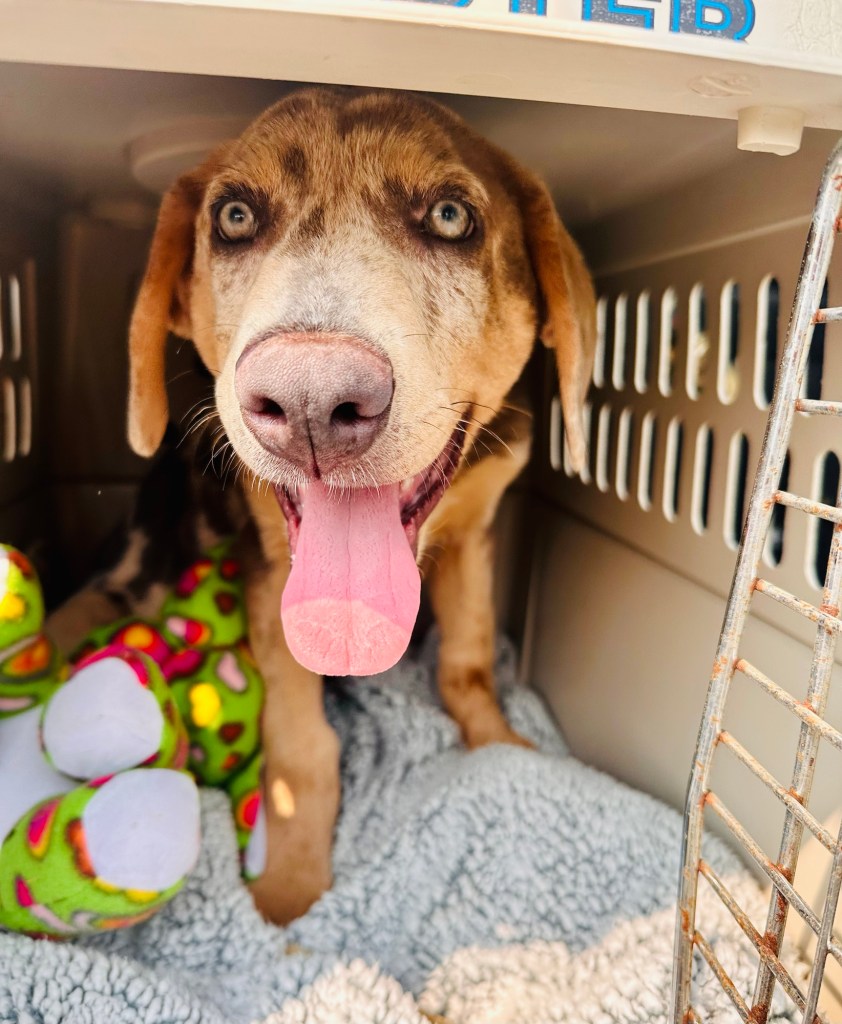
All the puppies were male and named after famous male actors. Bogard, in particular, caught my attention, he had soulful eyes and was looking for a foster home, however I made the decision to adopt him.
The First Meeting
Picture of the discarded puppies in the bush.
When we first met, it was clear that Bogard was a submissive puppy and would require socialization in order to develop confidence. He greeted me very timidly with his tail tucked between his legs. He also had the biggest feet I have ever seen on a puppy! Of course, because of the circumstances, we have no idea what breed of male dog or dogs bred the female. Maybe one day I will get DNA test to find out.
Considering the Breed
I am familiar with the Catahoula breed and the special needs that they have to thrive in a home. Currently, in Canada, there are very few reputable Catahoula breeders and the range of price for a pure bred dog could be anywhere between $1250 – $2000. In Canada the Catahoula is considered a rare breed, however in the United States, rescues are inundated with abandoned Catahoulas. The main reason being that while the pups often are bred for and display beautiful merle coloring the temperament is not for everyone or every circumstance. Often chosen for their beautiful coats, the needs for a Catahoula to have a job and be mentally stimulated are overlooked. Dogs without proper socialization, stimulation and companionship end up being terrors that will destroy a house, and / or become stubborn, independent, dominant and aggressive. When owners realize they have lost control, unfortunately, dogs are abandoned and / or surrendered.
While Bogard does have beautiful markings and was the pick of the litter by the woman who runs the rescue he remained as one of the final pups available. I fully understood that choosing a Catahoula isn’t about how they look, but rather about whether my home would be a good fit for his temperament and strengths.
Adopting a Rescue
Statistics report that over 6.5 million animals enter shelters each year with only approximately half of these being adopted. Despite breeders often maintaining that they are not part of this challenge, 25 – 30% of these are pure bred animals. Sadly, and surprisingly only about 10% of dogs that are born find a forever home! This was one of the main reason why the breeder who I got Clover from no longer breeds dogs. Too many were being returned and requiring rehoming. Now, she too adopts rescues.
While the statistics may pull on our heart strings, choosing to adopt a rescue requires careful consideration. Getting a pet is a commitment that lasts the life of the pet. Are you able to commit to supporting the pet through integration challenges? Can you afford the vet and food bills? Are you able to commit to 12 years of dog ownership? Can you commit to having a dog through life changes like potential moves or job changes?
Additionally, when I purchased Clover from an amazing breeder she came with important socialization and training that occurred before she was eight weeks old. According to research, this is a sweet spot for puppy training. Bogard would be coming home to me at approximately 12 – 14 weeks with very few experiences having been raised in the bush and then the rescue. Understanding the background, experiences and challenges of the rescue dog is key as one moves forward with integrating the rescue into the home.
The positives of choosing a rescue is that I was able to save a significant amount of money, and provide a loving home for a puppy in need. Adoption fees are much cheaper than purchasing a dog from a breeder that may have to be transported across the country. Often the puppies will be spayed and / or neutered by the rescue or a reduced adoption fee offered if spay or neutering is required by the adoptee.
Integration
Almost Home was sure to remind me that integrating a rescue puppy would be a process. They advised three days, three weeks, and three months would be the time markers where I could expect to see significant changes in integration and behavior, and I would say at the three week anniversary of my pup coming to live with me that this would be accurate.
Stay tuned for future blog posts about what integrating a rescue pup has been like in my home.
__________________________________
If you like our content, as an act of reciprocity, please consider liking and subscribing.
Be well!
 thepolestarpost